Sign up to register and receive a Zoom link to our next session!
What this is:
Ask a College Kid is a recurring series. A space where high school students (and parents) get to hear directly from college students who have just gone through the application process. It’s a simple idea that works: student-to-student perspective cuts through the noise, lowers stress, and replaces the unknown with real experience.
Previous Sessions…
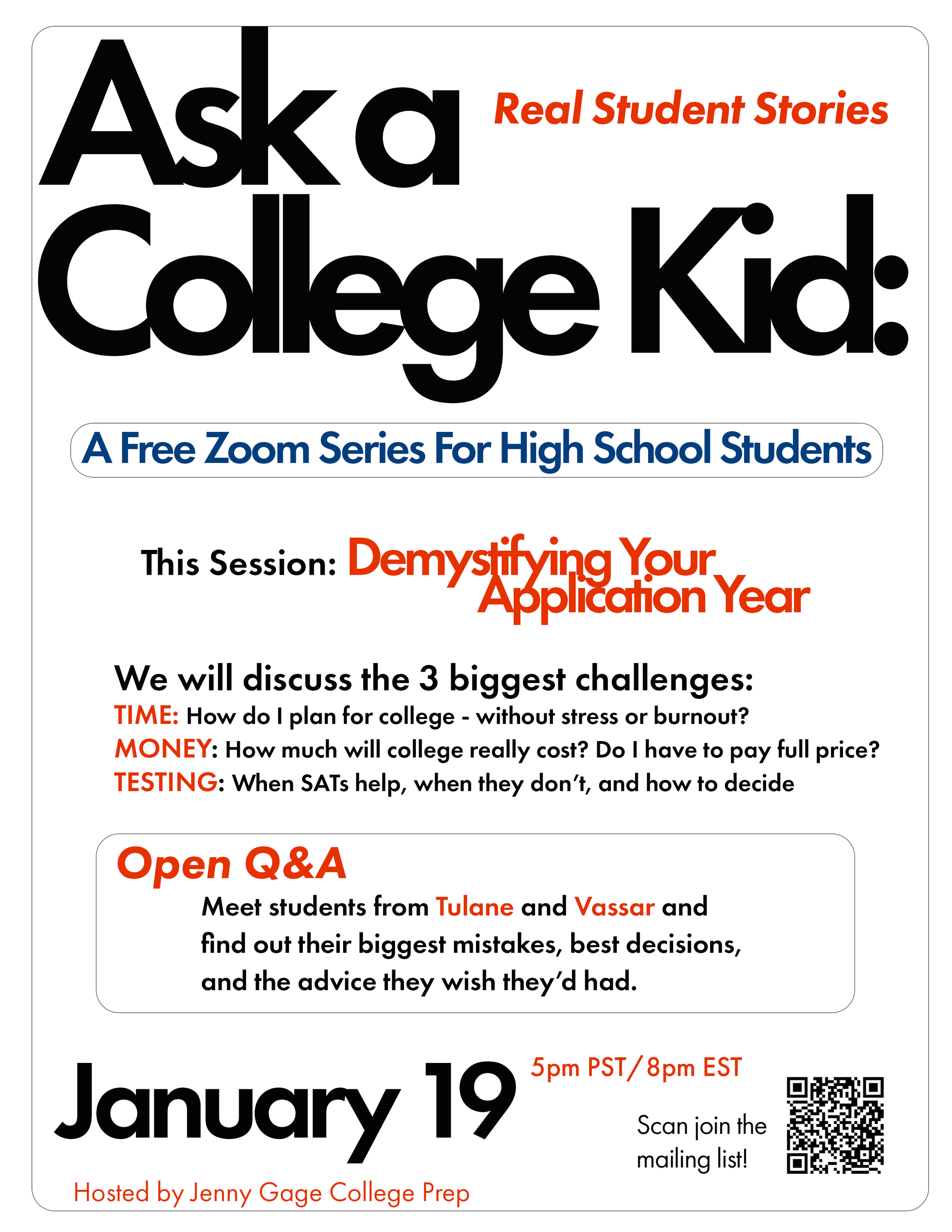
January 19th: Demystifying Your Application Year
Thank you to everyone who joined our January conversation, and especially to Vera (Vassar ’29) and Etta (Tulane ’25)for sharing their stories with such generosity and clarity.
Key Takeaways from the Conversation
Money matters—and it belongs early in the conversation.
Hearing directly from students who made real financial decisions helped clarify how aid, merit scholarships, and appeals actually work in practice. A key reminder: the sticker price is often not the final price, and affordability can coexist with fit and opportunity.
Testing is a strategy, not a requirement.
Vera and Etta spoke candidly about choosing where testing fit into their applications—and where it didn’t. The takeaway was simple and reassuring: submit scores when they strengthen your story, and know that many students are admitted to excellent schools without them.
Activities tell a story when they reflect real commitment.
Rather than perfectly curated résumés, colleges respond to sustained engagement and growth. Long-term involvement—in sports, arts, work, or leadership—helps admissions readers understand who a student is and how they invest in what matters to them.
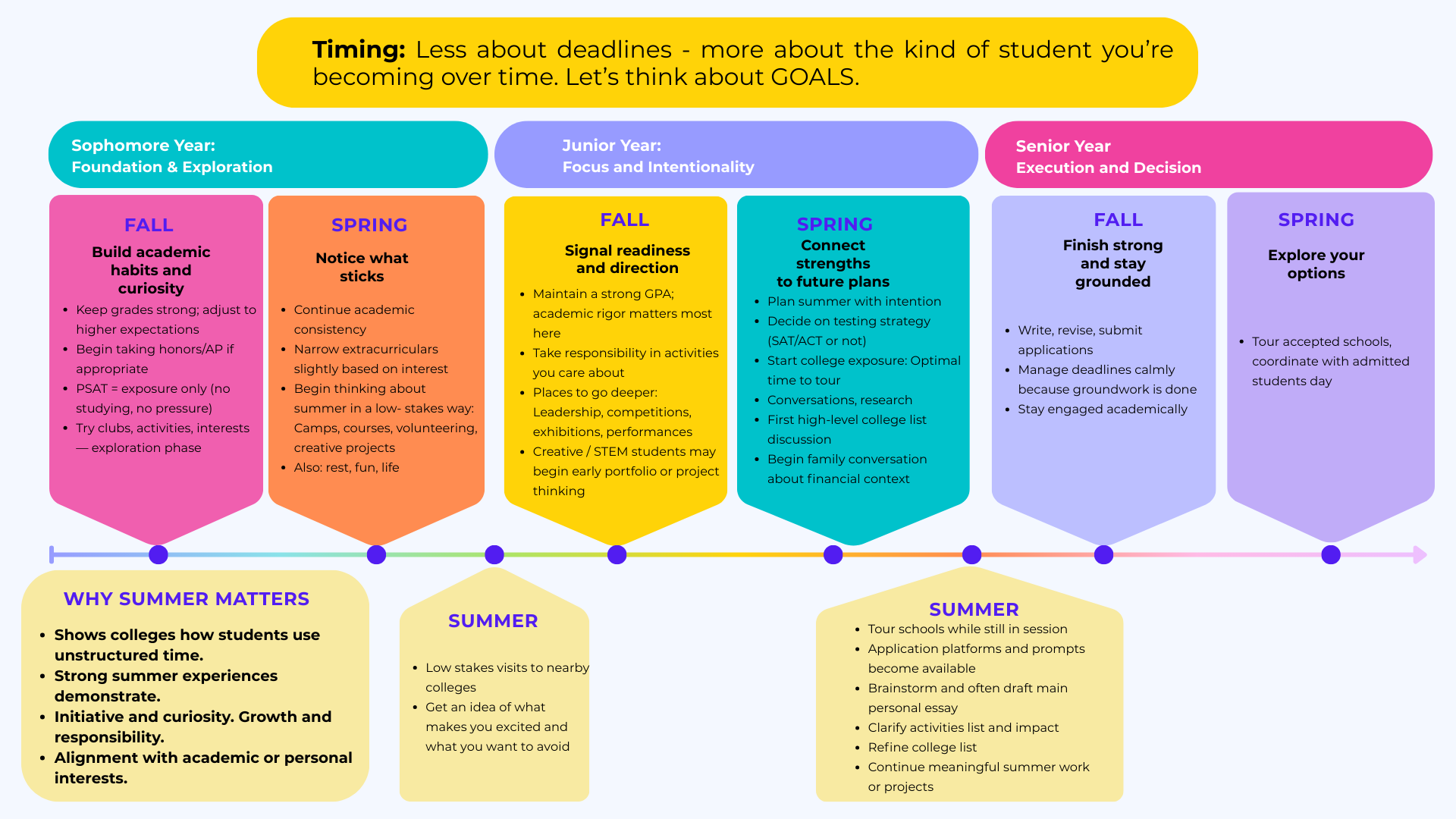
Timing makes the process feel manageable.
Breaking high school into clear phases—rather than treating admissions as a single overwhelming moment—can dramatically reduce stress. Tools like a running “brag sheet” and earlier essay reflection help students stay grounded and prepared.
Essays should sound like a real person wrote them.
Some of the most resonant moments came from hearing how these students approached writing—trusting their voice, resisting over-editing, and remembering that the goal is connection, not perfection.
Several of you asked Etta what essay book she was referring to. It is Essays that Worked for College Applications. Another great resource is The College Essay Guy website and books.
A Final Thought
What stood out most was how reassuring it can be to hear from peers who’ve already walked the path. There is no single “right” route to college, and understanding that—through real student voices—can transform anxiety into confidence.
We look forward to continuing these conversations and keeping this space open for students to learn from one another.
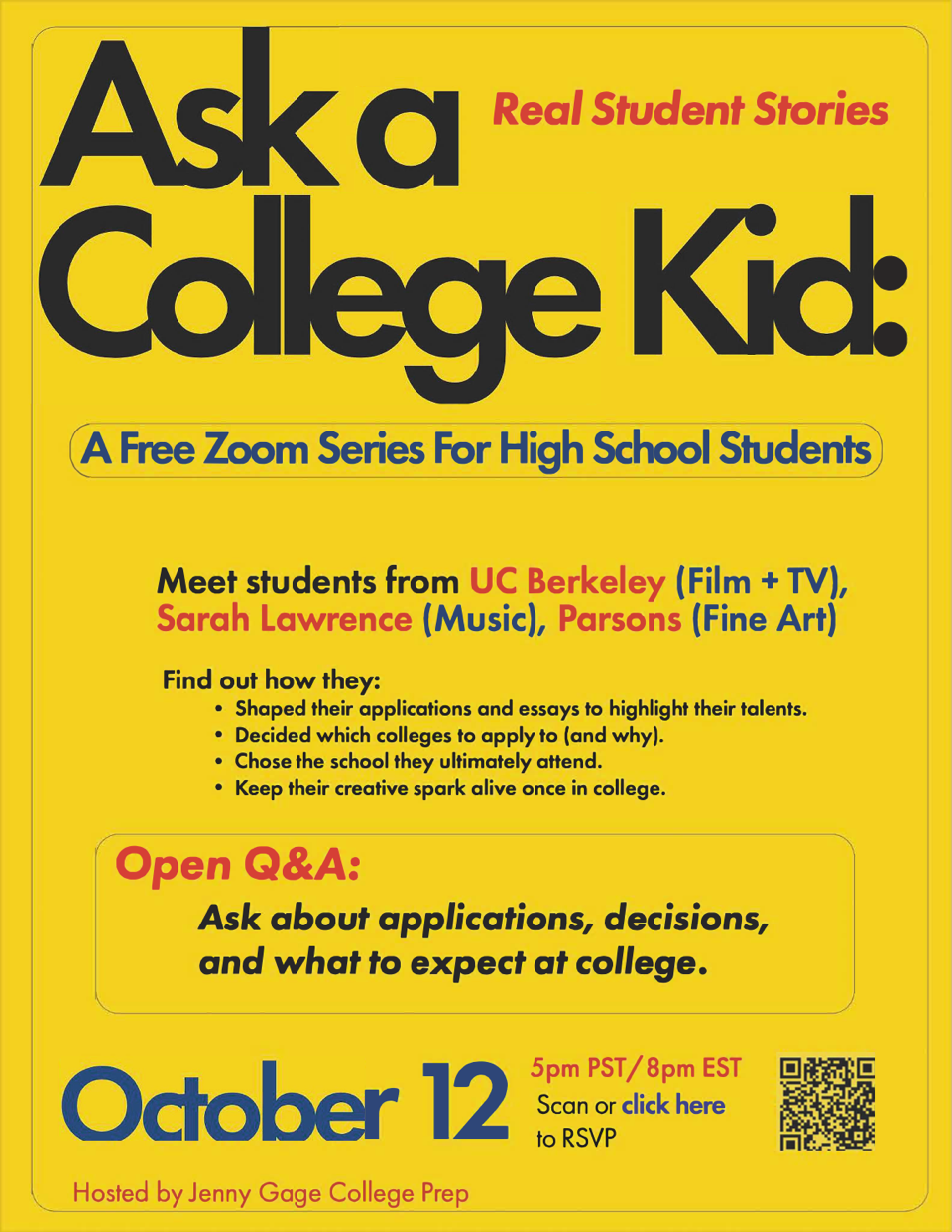
October 12th: Creativity as a Superpower
Ask a College Student: Creative Paths • Portfolios • Finding Fit
Penelope (Sarah Lawrence ‘25), Ruby (Parsons ’25), David (UC Berkeley ‘28)
Key Takeaways from the Conversation
This installment centered on a question we hear constantly: “What is it actually like to go through this process—and then land somewhere real?” Students shared candid, reassuring perspectives on applying through a creative lens—whether that meant art school, film at a large university, or a self-designed liberal arts path that leaves room for multiple passions.
The conversation was especially helpful for students who feel most themselves in creative work (art, film, music, writing) and want to understand how that translates into applications, portfolios, and ultimately choosing a school.
Creative students have more than one “right” college path.
We heard three different versions of success:
A small, mentorship-driven environment (Sarah Lawrence)
A specialized art/design school with close faculty relationships (Parsons)
A large university with scale, flexibility, and options (Berkeley)
Portfolios can carry major weight—especially when GPA/testing isn’t the headline.
Ruby and David emphasized that when test scores are optional (and sometimes not submitted at all), your portfolio + essays become the core of the application. The work doesn’t just show talent—it shows commitment, voice, and trajectory
Tailoring your submission is part of the strategy, not “extra.”
Ruby described how different schools allow different numbers/types of portfolio pieces—and how she curated work intentionally to match:
the school’s format (quantity/requirements)
the program she wanted
the creative identity she was presenting
Visiting matters—when you can do it.
All three guests visited the school they ultimately attended. For some, that visit happened only after acceptance, but it still played a real role in confidence and clarity.
Adjustment surprises are normal (and often oddly specific).
Students shared the kinds of real-life transitions nobody talks about enough:
food and living setup (and how a kitchen can change everything)
commuting and navigating a new city
dorm culture (from quiet/isolating to energizing)
imposter syndrome—especially in high-talent creative environments
Big school vs small school isn’t “better/worse”—it’s about how you want to live.
Small schools can offer deep faculty connection and community—plus the “you know everyone” feeling.
Big schools can feel overwhelming at first, but you can build a smaller world inside them through programs, majors, and chosen communities.
Admissions anxiety doesn’t predict outcome—and it isn’t the end of the story.
A powerful theme was what students would tell their senior-year selves:
stop refreshing email
trust that outcomes are information, not identity
give the first semester time
transferring is normal if needed
you can build a meaningful experience in more than one place